Co-Curricular Activities in Senior and Vocational Schools and Non-Formal Programmes: Complete Guide
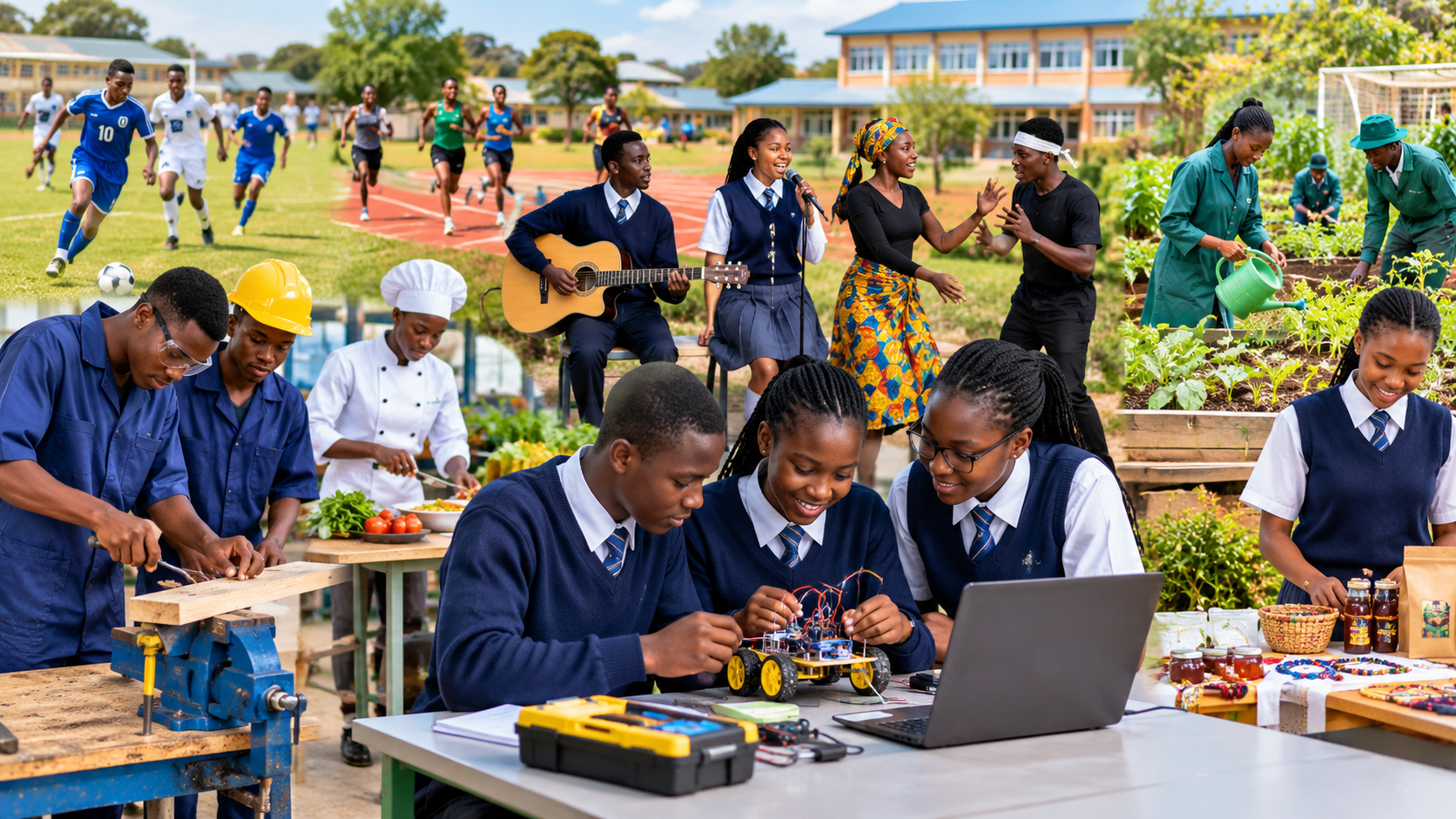
Co-curricular activities in senior and vocational schools and non-formal programmes play an important role in developing learners beyond academic knowledge. Through sports, music, drama, clubs, innovation, entrepreneurship, agriculture, community service and other practical activities, learners can develop skills that are useful in school, the workplace and everyday life.
Education is no longer viewed only as the process of preparing learners to pass examinations. Learners also need communication, creativity, collaboration, leadership, problem-solving, digital literacy, entrepreneurship and practical skills.
This is why co-curricular activities can complement classroom and technical learning.
For learners in senior schools, vocational training institutions and non-formal education programmes, participation in well-organised activities can provide opportunities to discover talents, develop confidence and apply knowledge in practical situations.
What Are Co-Curricular Activities?
Co-curricular activities are organised activities that complement the formal curriculum.
They provide learners with opportunities to apply knowledge and develop skills outside ordinary classroom instruction.
Examples include:
- Sports and athletics
- Music and dance
- Drama and theatre
- Debate and public speaking
- Science and technology clubs
- ICT and coding
- Entrepreneurship
- Agriculture
- Environmental conservation
- Journalism
- Art and design
- Community service
- Leadership programmes
- Innovation projects
- Cultural activities
These activities should not simply be regarded as entertainment. When properly planned, they can contribute to learners’ personal, social, physical and career development.
Importance of Co-Curricular Activities in Senior Schools
Senior school learners are at an important stage of education because they are developing interests and considering future education, training and career pathways.
Co-curricular activities can provide additional opportunities for learners to explore those interests.
1. Talent Identification and Development
Academic performance does not always reveal every learner’s abilities.
Some learners may have exceptional talent in:
- Football
- Athletics
- Music
- Drama
- Art
- Technology
- Public speaking
- Leadership
- Entrepreneurship
Schools can use co-curricular activities to identify these abilities and provide opportunities for learners to develop them.
2. Development of Communication Skills
Debate, drama, journalism, music and public speaking can give learners opportunities to communicate ideas before an audience.
These experiences can strengthen:
- Speaking skills
- Listening
- Presentation
- Writing
- Team communication
- Confidence
Communication skills are useful in virtually every career.
3. Teamwork and Collaboration
Many activities require learners to work together.
Football teams, drama groups, choirs, science clubs and innovation teams all require cooperation.
Learners can therefore practise:
- Sharing responsibilities
- Respecting other people’s ideas
- Solving disagreements
- Working toward common goals
- Supporting team members
4. Leadership Development
Co-curricular activities can create opportunities for learners to take responsibility.
For example, learners can become:
- Club leaders
- Team captains
- Event organisers
- Project leaders
- Peer mentors
- Committee members
Such responsibilities can help learners develop organisational and leadership skills.
Major Co-Curricular Activities in Senior Schools
Sports and Games
Sports remain among the most common co-curricular activities in schools.
Depending on available facilities and programmes, learners may participate in:
- Football
- Volleyball
- Basketball
- Rugby
- Athletics
- Hockey
- Handball
- Netball
- Swimming
- Badminton
- Table tennis
- Chess
Sports can support physical fitness while also encouraging teamwork, discipline and perseverance.
Music and Performing Arts
Music provides learners with opportunities to develop creative and performance skills.
Activities may include:
- School choirs
- Instrumental music
- Traditional music
- Contemporary music
- Cultural performances
- Dance
- Poetry
- Spoken word
These activities can also help preserve cultural heritage.
Drama and Theatre
Drama can help learners develop creativity and communication.
Activities may include:
- School plays
- Theatre
- Role-playing
- Script writing
- Storytelling
- Poetry
- Film production
Drama can also help learners become more comfortable speaking in front of other people.
Debate and Public Speaking
Debating requires learners to research subjects, organise arguments and present their ideas.
Debate clubs can address educational, environmental, technological, economic and community-related subjects.
The activity encourages:
- Critical thinking
- Research
- Communication
- Listening
- Logical reasoning
Technology and Innovation Clubs
Technology is increasingly important in education and employment.
Senior schools can encourage learners to participate in:
- ICT clubs
- Coding
- Robotics
- Digital design
- Electronics
- Science projects
- Innovation competitions
- Computer programming
Learners can use these activities to develop solutions to problems in their schools and communities.
For example, learners could develop a simple website, design a prototype, create a digital information system or investigate an environmental challenge.
Entrepreneurship Activities in Senior Schools
Entrepreneurship activities can help learners understand how businesses operate.
Schools can establish entrepreneurship clubs where learners learn about:
- Business ideas
- Budgeting
- Saving
- Marketing
- Customer service
- Product development
- Financial management
- Business planning
Learners can also participate in supervised enterprise projects.
The objective is not simply to generate income but to develop practical skills and an understanding of entrepreneurship.
Agriculture as a Co-Curricular Activity
Agriculture can provide practical learning opportunities.
Depending on the school’s location and available resources, learners may participate in:
- Vegetable gardening
- Tree nurseries
- Poultry projects
- Beekeeping
- Fish farming
- Composting
- Environmental conservation
Agriculture-related activities can introduce learners to farming, agribusiness, food production and environmental sustainability.
Co-Curricular Activities in Vocational Schools
Vocational education focuses strongly on practical and technical skills. Co-curricular activities can complement this training by helping learners develop additional competencies.
Vocational institutions can organise activities related to:
- Technical innovation
- Entrepreneurship
- Sports
- Creative arts
- Leadership
- Community service
- Skills competitions
- Digital technology
Technical Innovation
Learners can form innovation groups based on their technical areas.
For example:
Electrical learners can work on simple energy projects.
Automotive learners can develop practical vehicle-maintenance solutions.
Carpentry learners can design furniture prototypes.
ICT learners can develop websites or digital applications.
Building learners can explore affordable construction solutions.
These projects can encourage creativity and problem-solving.
Entrepreneurship in Vocational Education
Technical skills and entrepreneurship can complement each other.
A learner who has acquired skills in:
- Plumbing
- Welding
- Carpentry
- Masonry
- Automotive repair
- Electrical installation
- Fashion design
- Hairdressing
- Catering
- ICT
may also benefit from learning how to manage customers, calculate costs, market services and operate a small enterprise.
Vocational institutions can therefore use entrepreneurship clubs and business competitions to strengthen these skills.
Skills Competitions in Vocational Institutions
Practical competitions can give vocational learners opportunities to demonstrate their abilities.
Possible competitions include:
- Welding
- Carpentry
- Masonry
- Plumbing
- Automotive technology
- Electrical installation
- Fashion design
- Catering
- Hairdressing
- ICT
- Agriculture
Such competitions can encourage learners to improve precision, creativity, teamwork and problem-solving.
Role of Non-Formal Programmes
Non-formal education provides organised learning opportunities outside conventional formal education structures.
It may serve:
- Young people
- Adults
- Community members
- Out-of-school learners
- People seeking additional skills
- Learners who require flexible programmes
Examples include:
- Adult literacy
- Community learning
- Youth skills programmes
- Short vocational courses
- Digital-skills training
- Entrepreneurship programmes
- Community-based education
Co-curricular activities can make these programmes more engaging and practical.
Co-Curricular Activities in Non-Formal Education
Community Sports
Sports can bring learners together and encourage physical fitness, teamwork and social interaction.
Entrepreneurship Projects
Learners can participate in practical projects such as:
- Poultry keeping
- Beekeeping
- Vegetable farming
- Tailoring
- Carpentry
- Welding
- Food processing
- Small retail businesses
- Digital services
Digital Literacy
Non-formal programmes can establish digital-skills activities covering:
- Computer basics
- Smartphone use
- Internet research
- Digital communication
- Online safety
- Digital marketing
- Basic coding
Literacy Clubs
Adult and community literacy programmes can incorporate:
- Reading clubs
- Writing activities
- Storytelling
- Public speaking
- Newspaper reading
- Group discussions
How Co-Curricular Activities Support Competency Development
Co-curricular activities can support a wide range of competencies.
| Competency | Examples of Activities |
|---|---|
| Communication | Debate, drama, journalism |
| Collaboration | Team sports, clubs |
| Creativity | Music, art, innovation |
| Critical thinking | Debate, science clubs, chess |
| Problem-solving | Innovation projects |
| Leadership | Clubs, teams, community projects |
| Digital literacy | ICT and coding |
| Entrepreneurship | Business clubs |
| Self-management | Sports and projects |
This makes co-curricular activities particularly valuable when education focuses on practical competencies and real-world application.
How Schools Can Organise Effective Co-Curricular Activities
Schools and institutions can follow several steps.
1. Identify Learner Interests
Learners should have opportunities to indicate the activities they would like to participate in.
2. Establish Clubs
Schools can create clubs according to available resources and learner interests.
Examples include:
- Science Club
- ICT Club
- Agriculture Club
- Debate Club
- Journalism Club
- Environmental Club
- Entrepreneurship Club
- Music Club
- Drama Club
3. Create an Activity Calendar
Institutions should prepare a timetable for:
- Club meetings
- Sports training
- Competitions
- Performances
- Community projects
- Exhibitions
4. Provide Appropriate Supervision
Teachers, trainers and other qualified personnel should supervise activities and ensure learners are appropriately supported.
5. Provide Resources
Activities may require:
- Sports equipment
- Computers
- Musical instruments
- Workshop equipment
- Art materials
- Books
- Agricultural tools
Safety should always be considered when providing and using equipment.
Challenges Facing Co-Curricular Activities
Some institutions may face challenges such as:
- Limited funding
- Inadequate equipment
- Lack of facilities
- Limited time
- Shortage of specialised trainers
- Transport challenges for competitions
- Unequal participation opportunities
Schools can address some of these challenges through partnerships, careful planning, community support and better use of existing resources.
Making Co-Curricular Activities More Inclusive
Activities should provide opportunities for learners with different interests and abilities.
Schools can adapt activities where necessary so that learners with disabilities and other participation barriers can take part meaningfully.
Inclusion can involve adapting:
- Sports
- Games
- Performing arts
- Clubs
- Technology activities
- Community projects
The goal should be meaningful participation rather than simply enrolling learners in activities.
Role of Parents in Co-Curricular Activities
Parents can support learners by:
- Encouraging participation
- Recognising talents
- Providing appropriate support
- Attending performances
- Supporting competitions
- Encouraging a balance between academic work and activities
Parents should also avoid placing excessive pressure on learners to pursue activities they do not enjoy.
Role of Teachers and Trainers
Teachers and vocational trainers can contribute by:
- Identifying learner talents
- Supervising clubs
- Providing mentorship
- Organising activities
- Encouraging participation
- Promoting inclusion
- Monitoring learner progress
- Maintaining safety
Their role is particularly important when activities involve specialised equipment or technical skills.
Why Co-Curricular Activities Matter for Future Careers
The modern workplace requires more than technical knowledge.
Employers and entrepreneurs often need people who can:
- Communicate
- Work in teams
- Solve problems
- Lead others
- Adapt to change
- Use technology
- Manage time
- Think creatively
- Serve customers
- Take responsibility
Co-curricular activities can give learners opportunities to practise many of these skills in real situations.
For vocational learners, this is particularly useful because technical competence can be complemented by communication, entrepreneurship and teamwork.
Frequently Asked Questions
What are co-curricular activities in senior schools?
They are organised activities that complement formal classroom learning, including sports, music, drama, debate, technology, agriculture, entrepreneurship and clubs.
What are examples of vocational school co-curricular activities?
Vocational institutions can offer technical innovation, entrepreneurship, sports, skills competitions, creative arts, digital activities and community-service projects.
What are non-formal education programmes?
They are organised learning programmes outside conventional formal education structures, including adult literacy, community learning, youth training and flexible skills-development programmes.
Why are co-curricular activities important?
They provide opportunities for learners to develop talents, communication, teamwork, leadership, creativity, physical fitness and practical skills.
How do co-curricular activities support career development?
They allow learners to explore interests while developing practical and transferable skills that can complement academic or technical qualifications.
Can vocational learners participate in sports?
Yes. Sports can complement vocational training by supporting physical fitness, teamwork, discipline and social development.
How can schools improve co-curricular activities?
Schools can improve activities by identifying learner interests, providing appropriate resources, training activity supervisors, creating clear schedules and encouraging inclusive participation.
Final Thoughts
Co-curricular activities should be regarded as an important component of holistic education rather than simply a way of occupying learners outside lessons.
In senior schools, they can help learners explore talents and interests. In vocational institutions, they can complement technical training with entrepreneurship, leadership, teamwork and innovation. In non-formal programmes, they can make learning more flexible, practical and connected to community needs.
When properly planned and supported, activities such as sports, music, drama, technology, agriculture, entrepreneurship, environmental conservation and community service can contribute significantly to learner development.
The ultimate goal is to help learners develop a balanced combination of knowledge, practical skills, creativity, confidence, responsibility and competencies that can support them in further education, employment, entrepreneurship and community life.