Introduction
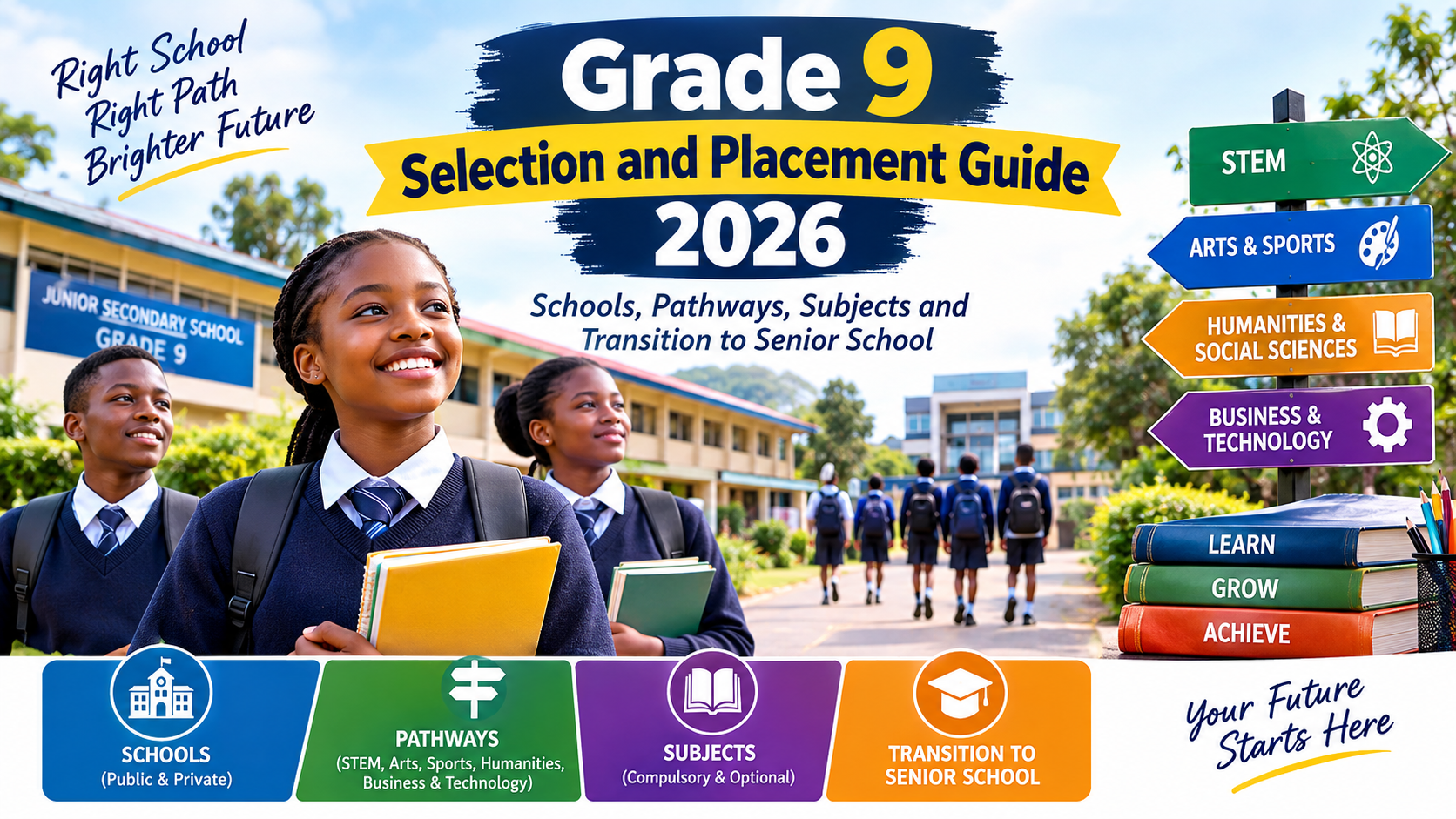
The transition from Grade 9 to Grade 10 is an important stage in Kenya’s Competency-Based Education (CBE) system.
At Grade 9, learners begin preparing for the transition to Senior School, where they will pursue learning within different pathways, tracks and subject combinations.
For learners, this stage involves making informed decisions about the type of Senior School they would like to join and the areas of learning that match their interests, abilities and aspirations.
For parents and teachers, the process requires careful guidance. Choosing a school should not be based solely on popularity, location or what friends are selecting. Families need to understand the available pathways, school programmes and the learner’s individual strengths.
This Grade 9 selection and placement guide explains the process from school selection to placement and eventual admission into Grade 10.
What Is Grade 9 Selection?
Grade 9 selection is the process through which learners preparing to transition to Senior School indicate their preferred schools and learning programmes.
The process gives learners an opportunity to express preferences concerning:
- Senior Schools
- Pathways
- Tracks
- Subject combinations
- Areas of interest
The selection exercise is therefore an important part of preparing for the transition from Junior School to Senior School.
However, selecting a school does not automatically guarantee placement in that school.
What Happens After Grade 9?
The broad transition process can be understood as:
Grade 9 Learning → Assessment → School Selection → Placement → Placement Results → Reporting → Grade 10 Admission
Each stage has a different purpose.
Learners should therefore understand what happens at every stage instead of assuming that selecting a school is the same as being placed there.
Grade 9 Selection vs Grade 10 Placement
These two terms are sometimes used interchangeably, but they describe different stages.
| Grade 9 Selection | Grade 10 Placement |
|---|---|
| Learner indicates preferred schools | Learner is assigned to a Senior School |
| Learner chooses preferred programmes | Placement follows the official process |
| Takes place before placement | Comes after selection |
| Expresses preference | Determines the receiving school |
| Does not guarantee a particular school | Provides the school for reporting |
The key message for parents is:
Selection is a preference; placement is the official assignment.
Understanding Senior School Pathways Before Selection
One of the most important things Grade 9 learners and parents should do before making choices is understand the Senior School pathways.
The major pathways are
1. STEM Pathway
STEM stands for:
Science, Technology, Engineering and Mathematics.
It is designed for learners interested in scientific, mathematical, technological and technical areas.
Depending on the programmes offered, learners may engage with areas involving:
- Mathematics
- Sciences
- Applied sciences
- Technology
- Technical learning
- Engineering-related activities
- Practical problem-solving
Learners interested in scientific investigation, technology and technical problem-solving may wish to explore schools offering relevant STEM programmes.
2. Social Sciences Pathway
The Social Sciences pathway provides opportunities for learners interested in areas involving society, people, business, humanities and related fields.
Learning can involve competencies such as:
- Communication
- Research
- Critical thinking
- Entrepreneurship
- Analysis
- Social understanding
- Decision-making
Learners should investigate the specific subjects and combinations offered by individual Senior Schools before making their choices.
3. Arts and Sports Science Pathway
This pathway provides opportunities for learners interested in creative and sporting areas.
It can include areas associated with:
- Performing arts
- Visual arts
- Music
- Sports
- Creative expression
- Physical performance
Learners considering this pathway should pay particular attention to the facilities, programmes and opportunities available in the schools they are considering.
How Should a Grade 9 Learner Choose a Senior School?
School selection should begin with the learner rather than the school name.
Parents and teachers can help learners consider:
Learner’s interests
What subjects and activities does the learner enjoy?
Abilities
Which areas does the learner demonstrate strength in?
Talents
Does the learner have particular abilities in sports, music, arts, technology or other areas?
Learning preferences
Does the learner enjoy practical activities, research, creative work or theoretical learning?
Career aspirations
What areas does the learner currently find interesting?
Career interests can change over time, so learners should not feel pressured to make an irreversible career decision at Grade 9.
Step-by-Step Grade 9 School Selection Process
Step 1: Understand the CBE Pathways
Before selecting schools, learn about:
- STEM
- Social Sciences
- Arts and Sports Science
Understand what each pathway involves.
Step 2: Identify the Learner’s Strengths
Parents and teachers should review the learner’s performance and participation across different learning areas.
Consider:
- Classroom performance
- Practical skills
- Creativity
- Communication
- Sports
- Technology
- Leadership
- Collaboration
- Problem-solving
The purpose is to help the learner make an informed choice.
Step 3: Identify Suitable Subject Combinations
Learners should investigate the subject combinations available under their preferred pathway.
The combination selected should be compatible with:
- Learner interests
- Abilities
- Preferred pathway
- School programme
- Future learning interests
Step 4: Research Senior Schools
Before submitting choices, research the available schools.
Important considerations include:
- School category
- Location
- Pathways offered
- Subject combinations
- Boarding or day status
- Laboratories
- Workshops
- ICT facilities
- Sports facilities
- Arts facilities
- School capacity
- Accessibility
Step 5: Check the Schools’ Available Programmes
Not every Senior School offers every pathway or subject combination.
This is a critical point.
A learner should not select a school simply because it is well known.
First establish whether the school offers the programme the learner wants.
Step 6: Enter School Choices Carefully
When the official selection platform opens, learners should enter their preferred schools according to the applicable Ministry guidelines.
Carefully check:
- Learner details
- School names
- School codes
- Pathways
- Tracks
- Subject combinations
- Order of preference
Step 7: Review Before Submission
Before submitting the selection, go through every choice carefully.
A parent, teacher or school administrator can help the learner confirm that the information is accurate.
Pay particular attention to school codes and programme choices.
Step 8: Submit the Selection
Once everything is correct, submit the selection through the official platform within the specified selection period.
Where the system provides confirmation, keep the confirmation information safely.
What Is Grade 9 Placement?
After the selection process, placement takes place.
Placement involves assigning learners to Senior Schools according to the applicable official criteria.
Placement is therefore different from selection.
A learner can express a preference for a particular school, but final placement is determined through the official placement process.
How Is Grade 9 Learner Placement Determined?
The specific placement criteria applicable to a particular transition cycle should always be confirmed from the official Ministry guidelines.
Generally, placement can involve consideration of factors such as:
- Learner selection
- Assessment information
- Available school spaces
- School capacity
- Programme availability
- Gender considerations where applicable
- Other official placement requirements
Parents should avoid relying on unofficial claims about how placement is calculated.
How to Check Grade 10 Placement After Grade 9
Once placement results are officially released, learners and parents should use the designated official Ministry platform to check the outcome.
Verify details such as:
- Learner name
- Assessment number
- Junior School
- Assigned Senior School
- Pathway
- Track
- Subject combination
Parents should use official channels rather than relying on screenshots shared through WhatsApp or social media.
What Happens After Placement?
Once the learner has been placed, the next stage is reporting.
The learner and parent should obtain the appropriate joining information and prepare for admission.
The receiving school will then verify the learner’s:
- Identity
- Assessment details
- Placement
- Pathway
- Track
- Subject combination
- Required documentation
The learner can then complete the school’s admission process.
What If a Learner Is Not Placed in the First-Choice School?
A learner may not always receive the first school selected.
This is an important expectation for parents to understand.
The final placement depends on the applicable placement criteria and available opportunities.
If a learner receives a different school, parents should first examine the official placement information before making any decisions.
Where an official review or transfer mechanism is available, it should be followed.
Can a Learner Change the School After Placement?
A change of school after placement should follow the official process applicable to that transition cycle.
Parents should not assume that visiting another school automatically transfers the learner.
Before requesting a change, consider:
- Whether the school has space
- Whether the desired pathway is available
- Whether the relevant programme is offered
- Whether the learner meets applicable requirements
- Whether the official transfer/review window is open
Grade 9 Selection Checklist for Parents
Before the learner submits school choices, confirm:
- We understand the Senior School pathways.
- We have discussed the learner’s interests.
- We have considered the learner’s abilities.
- We have checked available subject combinations.
- We have researched the selected schools.
- We know which pathways each school offers.
- We have checked school location and accessibility.
- We have considered boarding/day arrangements.
- We have verified school information.
- We have reviewed the choices before submission.
Common Grade 9 Selection Mistakes
Choosing a school because of its reputation
A school’s reputation does not necessarily mean it offers the programme required by every learner.
Ignoring the learner’s interests
The learner should participate meaningfully in decisions about their education.
Selecting a pathway without understanding it
Learners and parents should understand what a pathway involves before selecting it.
Choosing subjects because friends selected them
Different learners have different abilities and interests.
Assuming selection guarantees placement
Selection expresses preference; placement is a separate process.
Relying on social media rumours
Official Ministry communication should be used for important placement information.
Role of Teachers in Grade 9 Selection
Teachers play an important guidance role.
They can help learners:
- Identify their strengths
- Understand pathways
- Interpret learning progress
- Explore subject combinations
- Recognise talents
- Set realistic learning goals
- Make informed school choices
Teachers should provide guidance without making decisions solely on behalf of the learner.
Role of Parents in Grade 9 Selection
Parents should support learners without imposing choices based entirely on family expectations.
Parents can:
- Discuss the learner’s interests
- Research Senior Schools
- Compare available programmes
- Consider practical issues such as distance
- Help verify selection information
- Encourage realistic expectations
- Prepare for reporting after placement
The best selection process is one where the learner, parent and teacher work together.
Why Grade 9 Selection Matters
The transition to Senior School introduces learners to more specialised areas of learning.
The decisions made during Grade 9 can influence:
- Learning experiences
- Subject choices
- Development of talents
- Practical opportunities
- Further education interests
- Exposure to different career areas
However, learners should also understand that education is a continuing journey.
A Grade 9 choice should not be treated as a permanent declaration of a learner’s entire future.
Frequently Asked Questions About Grade 9 Selection and Placement
What is Grade 9 selection?
Grade 9 selection is the process through which learners indicate preferred Senior Schools and learning programmes before transitioning to Grade 10.
What happens after Grade 9 selection?
After selection, the official placement process assigns learners to Senior Schools according to the applicable criteria.
Is Grade 9 selection the same as Grade 10 placement?
No. Grade 9 selection involves choosing preferred schools, while Grade 10 placement involves assigning learners to Senior Schools.
What are the main CBE pathways in Senior School?
The main pathways are STEM, Social Sciences, and Arts and Sports Science.
Can a learner choose any Senior School?
Learners should select from the schools and programmes available under the applicable official selection guidelines.
Does the first school choice guarantee placement?
No. A first choice represents a preference and does not automatically guarantee placement.
Can parents help learners select schools?
Yes. Parents can guide learners by helping them understand schools, pathways, programmes and practical considerations.
What should learners consider before selecting a school?
They should consider their interests, abilities, preferred pathway, available subjects, school programmes, location, facilities and other practical factors.
What happens after a learner is placed?
The learner checks the placement result, obtains joining information, reports to the assigned school and completes the admission process.
Final Takeaway
Grade 9 is an important preparation year for learners moving into Senior School.
A successful selection process starts with understanding the CBE pathways, identifying the learner’s interests and abilities, researching Senior Schools and checking the programmes available before submitting choices.
Parents and learners should also remember the difference between selection and placement.
Selection = learner’s preferred choices.
Placement = official Senior School assignment.
Admission = reporting to and being formally received by the assigned school.
The complete transition can therefore be summarised as:
Grade 9 → Understand pathways → Identify strengths → Research Senior Schools → Select schools and programmes → Submit choices → Placement → Check results → Report → Grade 10 admission.
The most important step is to rely on the latest official Ministry of Education instructions for the applicable selection and placement cycle, since dates, procedures, school choices and system requirements can change.