
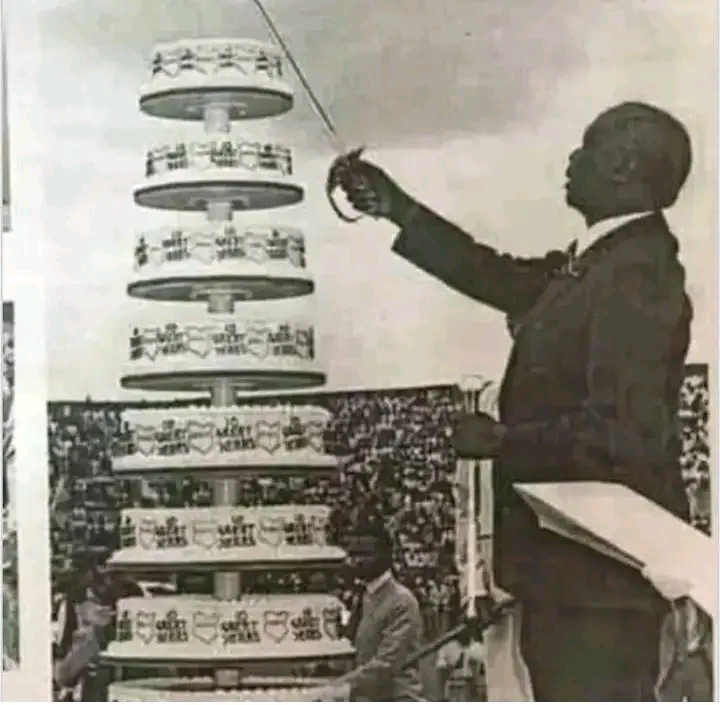
On 10th October 1988, Kenya marked a highly symbolic national event: the 10th anniversary of President Daniel Toroitich arap Moi’s presidency. The celebrations, popularly associated with Nyayo 10, reflected a period when national identity, politics, and public life were strongly intertwined under the Nyayo philosophy of “Love, Peace, and Unity.”
The day is remembered for its scale, symbolism, and deep involvement of government structures, schools, and communities across the country. It later became part of what was officially recognized as Moi Day, a public holiday that would remain in Kenya’s national calendar for years before being restructured under the 2010 Constitution of Kenya.
Background: The Rise of the Nyayo Era
President Moi assumed office in 1978, following the death of Kenya’s first president, Mzee Jomo Kenyatta. Over the next decade, his leadership was anchored on the Nyayo philosophy, a state ideology emphasizing:
- Love
- Peace
- Unity
By 1988, the government had fully embedded Nyayo messaging into public administration, education, and national celebrations.
The 10-year milestone was therefore not just a political anniversary—it was framed as a national moment of unity and reflection on a decade of leadership.
The “Nyayo 10” Celebrations: A National Spectacle
The 10th October 1988 celebrations were marked by elaborate state-organized events across Kenya. One of the most memorable symbols of the day was the ceremonial cake presented during the national event.
The Giant Celebration Cake
- A massive cake was prepared for the occasion
- It was so large that an ordinary knife could not be used to cut it
- The cake symbolized the magnitude of the 10-year Nyayo milestone
This theatrical presentation reinforced the grandeur of the national celebration and the central role of symbolism in state events during the Nyayo era.
Nationwide Preparations Before Moi Day 1988
In the weeks leading up to the celebrations, government administrative systems were actively engaged in nationwide mobilization.
Reports and historical accounts indicate that:
- Chiefs and local administrators were instructed to mobilize communities
- Contributions such as money and poultry (including chickens) were collected in some regions
- Communities were involved in constructing Nyayo monuments
- Every major town, including Nairobi, was expected to host a Nyayo monument
These activities reflected a highly organized and centralized approach to national celebration planning.
Nyayo Monuments Across Kenya
A defining feature of the 1988 celebrations was the construction of Nyayo monuments across the country.
These monuments were intended to:
- Symbolize national unity and development under Nyayo leadership
- Serve as permanent markers of the 10-year presidency milestone
- Reinforce government presence at local and regional levels
In many towns, these monuments became visible reminders of the political era and its ideology.
School Closures and Student Participation
Public schools played a major role in the celebrations, highlighting how deeply national events were integrated into the education system at the time.
On the day of the celebration:
- All public schools suspended learning activities
- Pupils were served special meals such as bread and milk
- The day had a festive atmosphere similar to a national holiday
- Students were indirectly included in national celebrations
For many learners, the experience felt more like a festive break than a political anniversary.
“Nyayo 10” Badges: A Symbol of the Era
Following the celebrations, teachers and pupils were issued commemorative badges inscribed:
“Nyayo 10”
These badges were worn on shirts and uniforms as part of the national celebration.
They symbolized:
- The 10-year leadership milestone
- Loyalty to the Nyayo philosophy
- National unity under a shared political identity
The badges became iconic memorabilia associated with the 1988 celebrations.
From National Celebration to Moi Day Holiday
The 1988 event helped solidify Moi Day as an official national holiday in Kenya. Over time, Moi Day evolved into a recurring public celebration associated with:
- National reflection on leadership
- Commemoration of President Moi’s tenure
- State-organized ceremonies and public events
However, with the promulgation of the 2010 Constitution of Kenya, the national holiday calendar was restructured. Moi Day was eventually replaced by:
- Mazingira Day (Environment Day)
- Utamaduni Day (Culture Day)
Despite this change, Moi Day remains part of Kenya’s historical and political memory.
Political and Historical Significance of Nyayo 10
The 1988 Moi Day celebrations stand out in Kenya’s history for several reasons:
1. Strong State-Led National Identity Building
The celebrations reinforced Nyayo ideology as a unifying national philosophy.
2. Large-Scale Administrative Coordination
From chiefs to schools, multiple layers of government were involved in organizing the event.
3. Integration of Education into National Politics
Public schools were directly included in state celebrations, reflecting the governance style of the time.
4. Symbolic Politics and Public Messaging
Elements such as the giant cake, monuments, and badges were powerful tools of political symbolism.
Legacy of Moi Day 1988
Today, the 1988 Nyayo 10 celebrations are remembered as a defining moment in Kenya’s post-independence political history. They represent a period when national celebrations were highly centralized, symbolic, and deeply embedded in everyday public life.
The legacy includes:
- Historical reflection on governance in the Nyayo era
- Discussion on state influence in education and public institutions
- Continued debate on national identity and public holidays
Conclusion
The 10th October 1988 Nyayo 10 celebrations remain one of the most memorable national events in Kenya’s history. Marking a decade of President Daniel arap Moi’s leadership, the event combined political symbolism, nationwide mobilization, and strong public participation.
While the Moi Day holiday has since evolved within Kenya’s constitutional framework, the memory of Nyayo 10 continues to reflect a unique chapter in the country’s political and social development.