

🌍 Introduction: A Major Shift in Kenya’s Teaching Career System
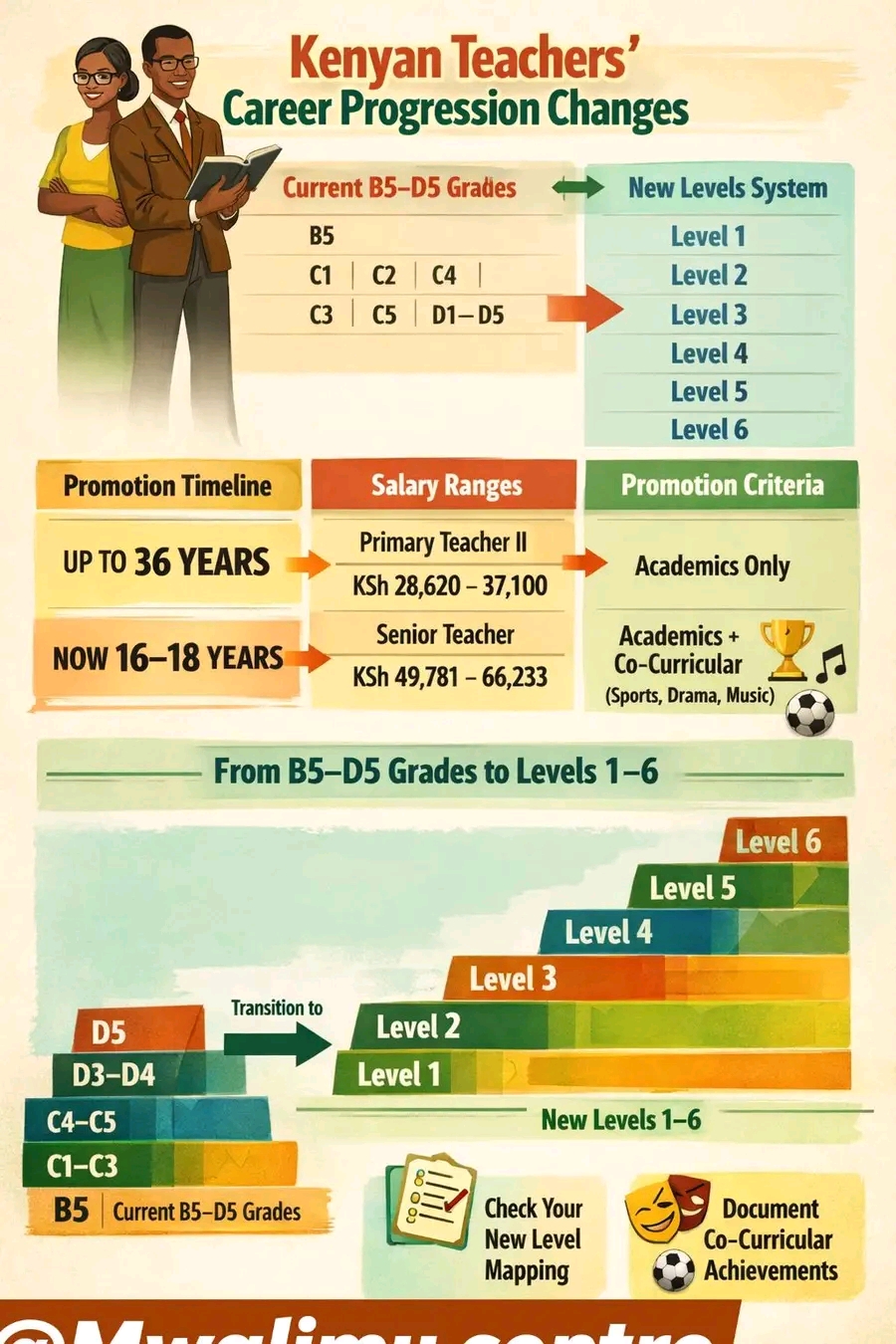
Kenya’s education sector is preparing for one of the most significant reforms in teacher management in recent years. The proposed Teachers Career Progression Guidelines (CPG) aim to replace the long-standing grading system (B5–D5) with a modern Levels System (Level 1–Level 6).
The reform is designed to solve long-standing challenges such as delayed promotions, career stagnation, and lack of clear progression pathways.
At the center of these reforms is the Teachers Service Commission, which oversees teacher registration, deployment, promotions, and professional development.
If implemented, this new framework could reshape how teachers grow professionally in Kenya for decades to come.
🔄 From Grades (B5–D5) to Levels (1–6): What Is Changing?
The current system uses a structured but often slow progression model:
- B5 (Entry level for teachers)
- C1–C5 (Mid-level teaching positions)
- D1–D5 (Senior leadership positions)
While structured, many teachers have complained about:
- Long waiting periods for promotion
- Limited vacancies
- Inequitable career advancement opportunities
- Lack of transparency in promotions
📊 Proposed Levels System
The new system replaces grades with a simplified structure:
- Level 1: Entry-level teacher
- Level 2: Early career teacher
- Level 3: Competent classroom teacher
- Level 4: Senior teacher
- Level 5: Advanced professional/mentor teacher
- Level 6: Expert/leadership & curriculum specialist
🎯 Why This Matters
The goal is to simplify career progression and make promotion pathways easier to understand, faster, and more predictable.
⏱️ Faster Promotions: From Decades to 16–18 Years
One of the biggest frustrations among teachers in Kenya has been slow career advancement.
Under the proposed reforms:
- Teachers could reach senior levels in 16–18 years
- Promotion delays caused by limited vacancies would be reduced
- A more structured and predictable timeline will be introduced
This marks a major shift from the current system where some teachers remain in the same grade for many years despite experience and qualifications.
📈 Automatic Promotion for Lower Grades (C1–C3)
The proposed CPG introduces a more streamlined promotion mechanism for early-career teachers.
Key highlights:
- Teachers in C1–C3 levels may receive automatic promotions
- Promotion after serving the required minimum years (proposed 3-year cycle)
- Performance evaluation will still be required for confirmation
🎯 Expected Impact:
- Reduced stagnation at lower career levels
- Increased motivation for young teachers
- Faster skill development and classroom effectiveness
🧠 Competency-Based Career Progression Model
The new system shifts focus from time-based promotion to performance and competency-based growth.
Promotions will depend on:
- 📘 Teaching competence
- 📊 Performance appraisal results
- 🧑🏫 Classroom experience
- 🎓 Academic and professional qualifications
- 📚 Continuous professional development (CPD)
This approach aligns Kenya with global education standards where skill and impact matter more than years served.
🧭 New Career Pathways for Teachers
One of the most important reforms is the introduction of separate career tracks, allowing teachers to grow based on their strengths.
👩🏫 1. Classroom Teacher Pathway
- Focus on teaching excellence
- Subject mastery and student performance
- Mentorship roles for junior teachers
🏫 2. School Leadership Pathway
- Principals, deputy principals, heads of departments
- Administrative and leadership responsibilities
- School management and policy implementation
📘 3. Curriculum & Support Pathway
- Curriculum development roles
- Teacher training and support
- Education research and advisory roles
🎯 Why This Is Important
Teachers will no longer be forced into administration to grow professionally. Instead, they can specialize and advance in their preferred career path.
🚧 Solving Promotion Bottlenecks and Career Stagnation
One of the main reasons for reform is the long-standing issue of stagnation in the teaching profession.
Current challenges include:
- Limited promotion vacancies
- Slow administrative processes
- Unequal regional distribution of opportunities
- Lack of clear timelines
Proposed solutions:
- Structured promotion cycles
- Increased transparency in selection
- Clear performance-based criteria
- Expanded promotion opportunities
This is expected to restore confidence in the profession and improve teacher morale.
🗣️ Stakeholder Consultations and Public Participation
Before full implementation, the reforms are expected to undergo extensive consultations involving:
- Teachers’ unions
- Education experts
- School administrators
- Government agencies
- Policy stakeholders
This ensures that the final framework reflects real classroom experiences and practical challenges.
🌟 Key Benefits of the Proposed CPG Reform
If implemented successfully, the new system could deliver major improvements:
✔ Career Development
- Faster promotions
- Clear progression pathways
- Reduced stagnation
✔ Teacher Motivation
- Fair recognition of performance
- Better job satisfaction
- Increased retention
✔ Education Quality
- More motivated teachers
- Improved classroom delivery
- Better student outcomes
✔ System Efficiency
- Transparent promotion structure
- Reduced bureaucracy
- Standardized evaluation system
⚖️ Possible Concerns and Challenges
While the reforms are promising, several concerns may arise:
- Implementation costs
- Need for retraining evaluators
- Transition challenges from old to new system
- Ensuring fairness in performance assessments
These issues will need careful management during rollout.
🏁 Conclusion: A New Era for Teachers in Kenya?
The proposed Teachers Career Progression Guidelines represent a bold attempt to modernize Kenya’s education workforce structure.
By introducing:
- A Levels system
- Faster promotion timelines
- Competency-based evaluation
- Multiple career pathways
…the reforms aim to create a more fair, transparent, and efficient system for all teachers.
If implemented effectively by the Teachers Service Commission, this could mark a historic shift toward a more motivated and professionally rewarded teaching workforce in Kenya.