
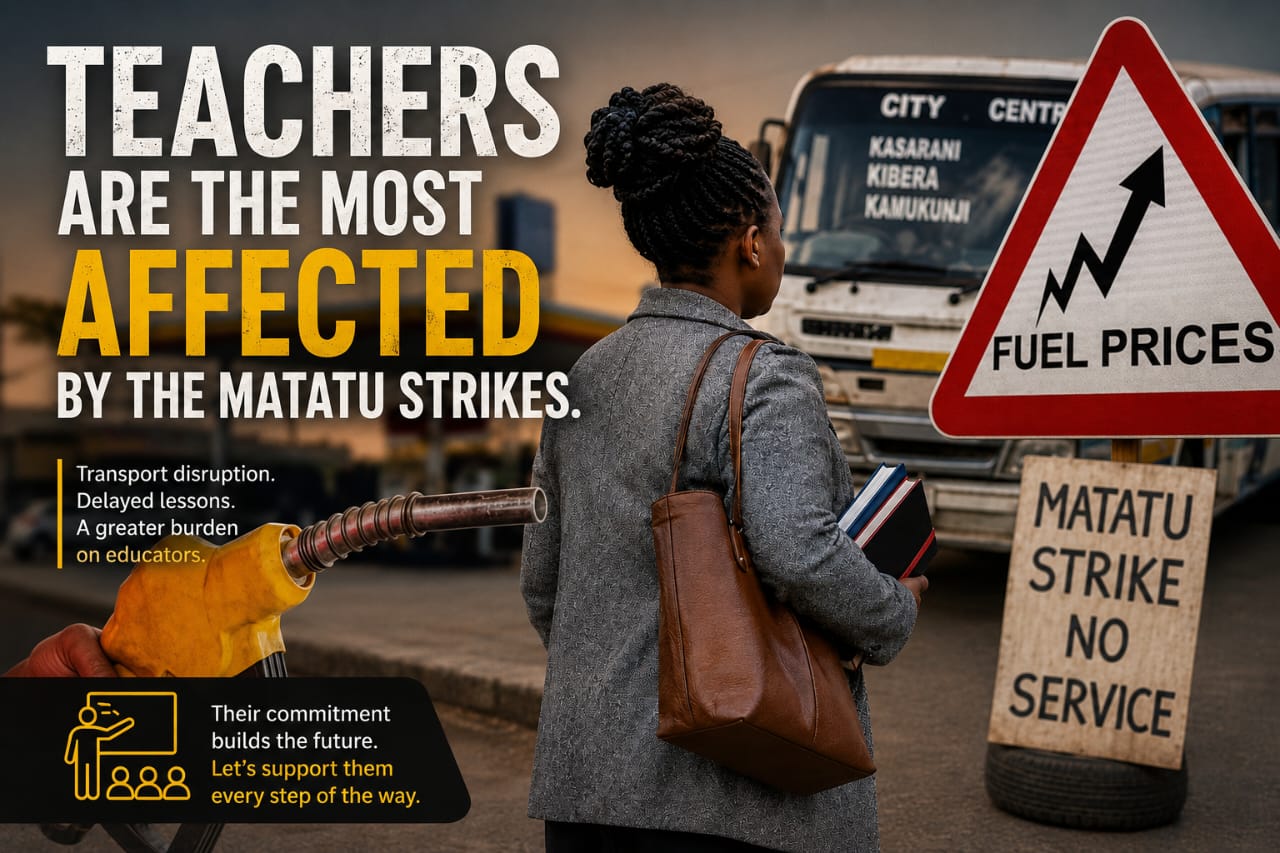
Kenya woke up today to major transport disruptions as matatu operators across the country staged a nationwide strike over rising fuel prices. The strike has heavily affected thousands of teachers, learners, and parents, especially in urban areas where public transport is the main means of commuting to schools.
Several schools in Nairobi, Kiambu, Thika, and other major towns were forced to suspend learning activities after fears that teachers and students would be unable to report safely to school.
Schools Forced to Suspend Classes
Private and public schools experienced confusion early in the morning as many learners remained stranded at home due to the lack of transport services. Some school administrations sent urgent messages to parents advising them not to send children to school until normal transport operations resume.
According to reports, some schools cited safety concerns and the inability of teachers and support staff to access schools as the main reason for suspending lessons.
The disruption comes at a critical time when schools are already struggling to complete academic schedules, syllabus coverage, and exam preparations.
Teachers Among the Most Affected
Teachers have emerged as one of the most affected groups during the strike. Many educators rely entirely on matatus for daily transport to and from schools. With vehicles withdrawn from roads and transport fares expected to rise sharply, many teachers were unable to reach their workstations.
In some areas, teachers reportedly walked long distances in an attempt to report to school, while others were forced to stay at home due to insecurity and lack of alternative transport.
The situation has added further pressure on teachers who are already facing economic challenges, delayed promotions, increased workloads, and high living costs.
Learners Left Stranded
Thousands of learners across the country were left stranded at bus stages and estates after matatus failed to operate. In Nairobi and surrounding counties, roads appeared unusually clear as most public service vehicles remained parked at petrol stations.
For candidates preparing for KCSE and KPSEA examinations, every missed lesson is a setback. Parents have expressed concern that continued disruptions could negatively affect academic performance if the transport crisis persists.
Some learners who managed to reach school reportedly found very few teachers present, making normal learning impossible.
Fuel Prices at the Centre of the Crisis
Matatu operators say the strike was triggered by the continued rise in fuel prices, which they argue has made operations unsustainable. Transport associations warned that unless the government intervenes, transport costs could continue rising, worsening the situation for ordinary Kenyans.
The protests have also affected businesses, government offices, and other sectors that rely on smooth transportation.
Call for Urgent Government Intervention
Education stakeholders are now calling on the government to urgently engage transport operators and find a lasting solution before learning is further disrupted.
Parents, teachers, and school administrators fear that prolonged strikes could interfere with school calendars, examinations, and overall academic progress.
As the country waits for a resolution, teachers and learners continue to carry the greatest burden of a crisis caused by rising fuel costs and transport instability.
Conclusion
Today’s matatu strike has once again exposed how dependent Kenya’s education sector is on public transport. When transport systems fail, teachers struggle to reach classrooms, learners miss valuable lessons, and schools are forced into uncertainty.
Unless sustainable solutions are found to address fuel prices and transport challenges, the education sector may continue facing repeated disruptions that directly affect the future of millions of Kenyan learners