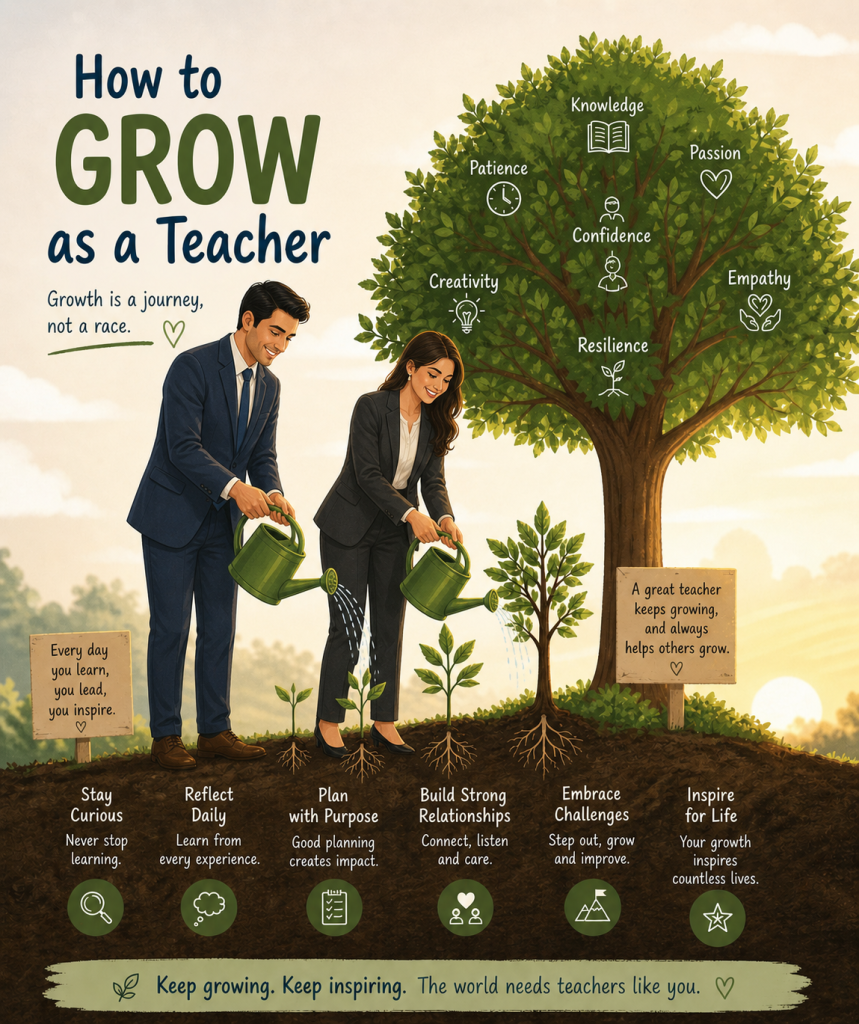
IntroductionTeaching is one of the most impactful professions in society, shaping future generations and influencing lifelong learning. However, becoming an effective teacher is not a one-time achievement—it is a continuous journey of growth, adaptation, and improvement. In today’s evolving education landscape, teachers must consistently refine their skills to remain effective and relevant.This guide explores practical strategies that can help teachers grow professionally and enhance their classroom impact.
1. Develop a Growth-Oriented Mindset
The foundation of professional growth begins with mindset. Teachers who embrace continuous improvement are more likely to adapt, innovate, and succeed.Reflect regularly on your teaching practices by asking:What worked well in my lesson?What challenges did I face?How can I improve next time?Consistent reflection transforms everyday teaching experiences into powerful learning opportunities.
2. Strengthen Subject Mastery
A strong command of subject content builds confidence and credibility. Go beyond textbooks and explore deeper concepts, current trends, and real-world applications related to your subject.When teachers fully understand their content, they can:Explain concepts more clearlyAnswer questions effectivelyMake lessons more engaging and relevant3. Prioritize Student UnderstandingEffective teaching is not about completing the syllabus—it’s about ensuring students understand and apply knowledge.To improve student comprehension:Ask open-ended questionsEncourage participation and discussionUse simple assessments to check understandingFocusing on learning outcomes rather than content coverage leads to better academic results.
4. Use Diverse Teaching Strategies
Students have different learning styles, and a one-size-fits-all approach rarely works. Incorporating a variety of teaching methods keeps lessons engaging and inclusive.Consider using:Group discussionsVisual aids and diagramsStorytelling and real-life examplesInteractive activitiesA dynamic classroom improves both engagement and retention.
5. Improve Classroom Management Skills
A well-managed classroom creates a productive learning environment. Establish clear rules and expectations from the beginning and maintain consistency.Effective classroom management includes:Clear communication of expectationsFair and consistent disciplineBuilding mutual respect with studentsA calm and structured environment allows learning to thrive.
6. Seek Feedback and Collaboration
Professional growth accelerates when teachers learn from others. Engage with colleagues, mentors, and even students to gain new insights.Ways to gather feedback:Peer lesson observationsStudent feedback sessionsProfessional discussions with fellow educatorsCollaboration exposes you to new teaching techniques and perspectives.
7. Invest in Continuous Professional Development
Education is constantly evolving, and teachers must stay updated. Attend workshops, enroll in training programs, and explore educational resources regularly.Professional development helps teachers:Learn modern teaching methodsStay updated with curriculum changesEnhance career growth opportunities
8. Build Strong Teacher-Student Relationships
Positive relationships enhance the learning experience. Students are more engaged when they feel respected, understood, and supported.To build stronger connections:Show genuine interest in students’ progressEncourage open communicationCreate a safe and inclusive classroom environmentStrong relationships lead to better discipline, participation, and academic success.
9. Embrace Technology in Teaching
Modern classrooms benefit from integrating technology into learning. Even simple tools can enhance engagement and understanding.Examples include:Digital presentationsEducational videosOnline quizzes and assessmentsTechnology makes lessons more interactive and accessible.
10. Practice Patience and Consistency
Growth in teaching takes time. Not every lesson will be perfect, and challenges are part of the journey.Stay consistent, keep learning, and remain committed to improvement. Over time, small efforts lead to significant transformation.
Conclusion
Growing as a teacher is a lifelong process that requires dedication, reflection, and adaptability. By improving your skills, embracing new strategies, and focusing on student success, you not only enhance your teaching career but also make a lasting impact on your students’ lives.