
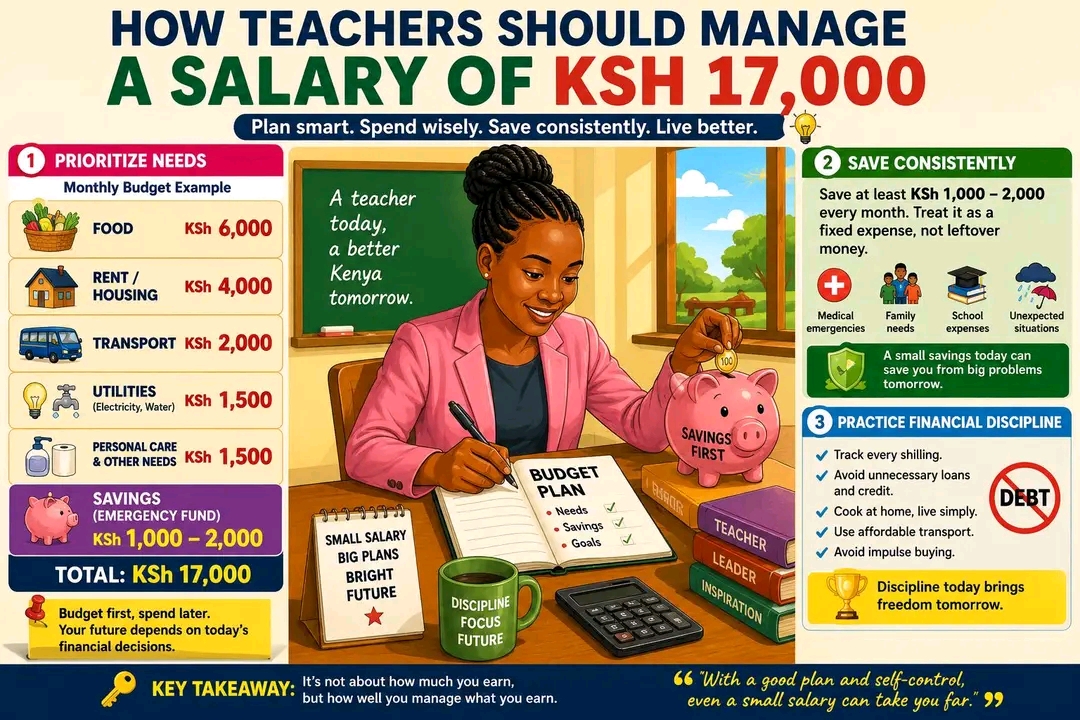
Introduction: The Hard Reality of a KSh 17,000 Salary
Surviving on a monthly salary of KSh 17,000 in Kenya is one of the toughest financial realities facing many early-career teachers and interns. With rising food prices, rent inflation, transport costs, and utility bills, the income often feels insufficient before the month even begins.
However, survival is still possible. It requires strict budgeting, discipline, lifestyle adjustments, and smart financial decision-making.
This guide breaks down realistic strategies a teacher can use to survive—and gradually improve financial stability—even on a very limited income.
Understanding the KSh 17,000 Monthly Breakdown
The first step in survival is knowing where every shilling should go. Without structure, money disappears quickly.
Sample Monthly Budget (Survival Mode)
| Expense Category | Estimated Cost (KSh) |
|---|---|
| Rent | 4,000 – 6,000 |
| Food | 5,000 – 6,000 |
| Transport | 2,000 – 3,000 |
| Utilities (water, electricity, phone) | 1,000 – 1,500 |
| Savings/Emergency Fund | 500 – 1,000 |
| Miscellaneous | 1,000 – 2,000 |
Key Insight:
A KSh 17,000 salary leaves almost no room for luxury. Every expense must be justified.
1. Rent: Your Biggest Financial Decision
Housing is the largest monthly expense and can determine whether you survive or struggle.
Smart Rent Strategies:
- Choose housing between KSh 3,500 – 6,000
- Live closer to school to reduce transport costs
- Consider shared housing or bedsitters
- Avoid urban centers with inflated rent prices
- Prioritize safety and proximity over comfort
Even saving KSh 1,000 on rent can stabilize your entire budget.
2. Food Management: Eat to Survive, Not to Impress
Food is another major expense that must be controlled carefully.
Practical Food Strategies:
- Cook at home daily
- Buy food in local markets, not supermarkets
- Focus on cheap staples:
- Maize flour
- Rice
- Beans
- Sukuma wiki
- Potatoes
- Avoid eating out or ordering food
- Prepare meals in bulk to reduce cooking costs
Monthly Food Strategy:
Plan meals weekly instead of daily spending. This reduces impulse buying and waste.
3. Transport: Cut Hidden Daily Costs
Transport may look small daily but becomes significant monthly.
How to Reduce Transport Costs:
- Live within walking distance of school
- Use public transport only when necessary
- Avoid unnecessary trips
- Combine errands into one trip
- Walk short distances instead of using boda boda
Saving even KSh 50 per day equals over KSh 1,500 monthly.
4. Utilities and Small Expenses: The Silent Budget Killers
Small expenses often destroy tight budgets because they are ignored.
Control Methods:
- Limit electricity usage (switch off unused lights)
- Use minimal mobile data bundles
- Avoid premium subscriptions (Netflix, paid apps)
- Share Wi-Fi or utilities where possible
- Repair instead of replacing items
Discipline in small expenses creates financial breathing room.
5. Saving Money on a Low Salary
Many people assume saving is impossible on KSh 17,000—but it is necessary.
Saving Strategy:
- Start with KSh 500 monthly if necessary
- Increase gradually as income improves
- Treat savings like a fixed bill
- Keep savings separate from spending money
- Build an emergency fund for medical or urgent needs
Why Saving Matters:
Without savings, any emergency pushes a teacher into debt.
6. Avoiding Debt Traps and Financial Stress
Debt is one of the biggest risks for low-income earners.
Rules to Follow:
- Avoid mobile loans unless it is a real emergency
- Never borrow for consumption (food, rent gaps, shopping)
- Repay loans quickly if unavoidable
- Avoid multiple overlapping debts
- Learn to delay non-essential purchases
Debt creates long-term financial pressure that reduces freedom.
7. Side Income Ideas for Teachers in Kenya
Increasing income is just as important as reducing expenses.
Practical Side Hustles:
- Private tuition (after school hours)
- Marking and revision guides
- Online freelance writing
- Small farming or poultry keeping
- Selling learning materials or notes
- Online content creation (education-focused)
Even an extra KSh 3,000–5,000 monthly can transform financial stability.
8. Financial Discipline: The Real Survival Skill
Survival on KSh 17,000 is not just about income—it is about discipline.
Core Habits:
- Track daily spending
- Plan purchases before buying
- Avoid emotional spending
- Separate needs from wants
- Stick strictly to a monthly budget
- Review finances every week
Without discipline, even a higher salary will still feel insufficient.
9. Common Mistakes Teachers Should Avoid
Many financial struggles come from avoidable mistakes:
- Living above means due to peer pressure
- Taking loans for lifestyle consumption
- Ignoring small daily expenses
- Poor meal planning
- No emergency savings
- Impulse buying during salary payment days
Avoiding these mistakes is as important as earning money.
10. Long-Term Financial Improvement Strategy
Survival should be temporary, not permanent.
Growth Plan:
- Start side income immediately
- Upgrade skills (ICT, tutoring, online work)
- Save consistently for opportunities
- Move toward better-paying positions
- Invest small savings in safe ventures
Financial stability grows step by step, not instantly.
Conclusion: Survival is Possible with Discipline and Strategy
Living on a KSh 17,000 salary in Kenya is undeniably difficult, especially for teachers with families and responsibilities. However, with strict budgeting, controlled spending, and smart financial habits, survival is possible.
The key is not comfort—it is control.
By managing rent, food, transport, and avoiding debt, a teacher can maintain stability even in tough economic conditions. Over time, side income and savings discipline can gradually move one from survival to financial growth